
Four books are in my rotation right now, and on paper they have nothing to do with each other. One is about a war in Spain. One is a novel about a metal band in 1986. One is about starting companies. One is about a ship stuck in the ice.
I didn’t line them up on purpose. It’s just what I happen to be reading. But the more I read, the more I felt like they were all connected, and that I could pull ideas out of them and use them in my work as an engineer. None of them are about my job. Here’s a quick look at each one, and then what I think ties them together.
Travels Through the Spanish Civil War, by Nick Lloyd
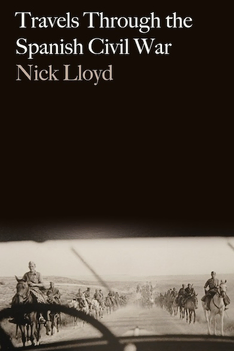
Nick Lloyd lives in Barcelona and runs a Spanish Civil War tour there. In this book he takes it on the road. He drives around Catalonia and Aragon, and even out into the rest of Europe, visiting the places where the war actually happened. He talks to historians, local guides, and the grandkids of the foreign volunteers who came to fight. Mostly it’s about what’s left: the buildings, the plaques, the objects, and how some of it gets remembered while some of it gets covered up.
One story that stuck with me is Francesc Boix, a photographer from Barcelona. His short life took him from the front lines in Catalonia all the way to testifying at the Nuremberg trials.
I met Nick, and I did his tour in Spain, so this one isn’t abstract for me. Standing in the places the book talks about, I connected with the story of the war. Ordinary working people fighting for their liberation, and a lot of them paying for it. I think it’s a useful reference point for how we think about our modern economic system, who it works for, and what people have been willing to risk to change that.
The Whyte Python World Tour, by Travis Kennedy
This is the fun one. It’s a debut novel set in 1986. A drummer named Rikki Thunder is in a heavy metal band called Whyte Python, and they head out on a big tour through Eastern Europe. What Rikki doesn’t know is that his girlfriend is an undercover CIA officer, and the tour is secretly an experiment. The plan is to use metal music to stir up trouble for the governments behind the Iron Curtain.
My drummer, Rocky, gave it to me while we were out on tour, and we read it in the tour van. It mixes geopolitics and rock and roll, and it’s a blast. But there’s a real idea under the fun. People often have underlying motives for what they do, and the people caught in the middle don’t always know what they’re part of. What matters is understanding the impact those choices have, the blast radius, on everyone nearby.
The Founder’s Dilemmas, by Noam Wasserman
Wasserman is a Harvard Business School professor who spent about ten years collecting data from thousands of founders. At its heart, the book is about the decision to start something in the first place, leaving the safe path to take a real chance on building something for yourself, and all the choices that come with that leap.
He found that most startups don’t die because of the product or the market. They die because of people problems. He sorts the hard calls into three buckets, which are who you start with, how you share the rewards, and who stays in control. There’s a constant tug-of-war between growing something big and keeping it true to what you set out to make, and you rarely get both for free.
For me the book is about what it takes to dedicate yourself to building something from the ground up. That means the tradeoffs with the people you build with, the decisions you can’t take back, and the discipline of showing up for it. It gave me words for the tradeoffs we were already feeling.
Endurance, by Alfred Lansing
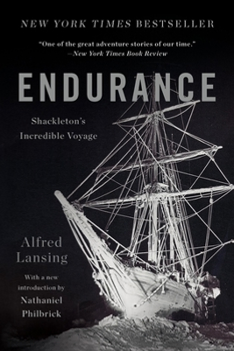
You probably know the outline. In 1914 Ernest Shackleton set out to cross Antarctica. His ship, the Endurance, got trapped in the ice and eventually crushed. Everyone was stranded in one of the harshest places on earth, and the goal of the whole trip became getting every single man home alive. Against all odds, they did.
This is the leadership book of the bunch. What gets me is how Shackleton handled the moment the plan fell apart. He didn’t cling to the original mission. He changed the goal right away, and then he paid attention to morale, to who was sharing a tent with whom, and to keeping people fed and hopeful through a very long wait.
So how does it all connect?
The plan will break. Shackleton lost his ship before he even started the real trip. Founders in Wasserman’s book find out their early decisions come back around years later. Software is the same. Every roadmap I’ve ever made got rewritten the moment real users touched the thing. Being good at this work isn’t about guessing right. It’s about noticing early that the goal changed, and saying it out loud.
It’s mostly about people. Wasserman says it in numbers. Shackleton shows it on the ice. Even the Whyte Python is really about a few people stuck in a van together. The hardest problems have almost never been technical. They’ve been about who decides, who owns what, and whether everyone feels heard.
Know who it’s for. The Spanish Civil War book is about working people fighting for a say in how they live and work, and about others who refused to let that story be erased. Software and companies are small by comparison, but the question carries over. Who does this serve, and how does it impact their life? A product should be a tool that helps the real lives of real people, ensuring equality and liberation rather than getting in their way. At the end of the day everything is human-centric. It’s not about the product or making money, it’s about improving lives.
Go and experience it firsthand. Lloyd takes you to the actual places instead of handing you a summary, and being there changes how you see the story. The same goes for building products. Going to where people are and experiencing it for yourself gives you a new perspective on how your work gets used and what the experience is really like for the person on the other end. Watch real people use the thing, and adapt to their real-life experience.
Mind the blast radius. Whyte Python is a rock and roll romp, but it’s really about hidden motives and what they cost the people nearby. Every decision at work has a blast radius too. Before you ship it, ask who it touches and what they don’t know.
If I had to boil it down to one line it would be that the map is going to be wrong, and the crew is what gets you across.
I’m still reading all four, so I might come back and update this when I finish. If you’ve read any of them, let me know what you thought.